
Healthcare is evolving rapidly, and one of the most impactful changes is the benefits of telehealth. For busy professionals, parents, or anyone with mobility challenges, telehealth provides a convenient way to access both medical and mental health services without sacrificing time, quality, or continuity of care.
Even though virtual visits are more common than ever, many people wonder whether they can truly replace or complement in-person appointments. Understanding the benefits of telehealth in primary care and psychiatry can help you make informed decisions—whether you need routine checkups, ongoing mental health support, or a combination of both.
What Telehealth Really Means
Telehealth refers to the delivery of healthcare services using digital communication tools, including video calls, phone consultations, and secure messaging platforms. Unlike traditional in-person visits, telehealth allows patients to connect with providers from the comfort of their home, office, or even while traveling.
Key aspects of telehealth include:
- Virtual visits for routine checkups or follow-ups
- Remote monitoring of chronic conditions using digital tools
- E-prescriptions for medications
- Mental health sessions including therapy and psychiatry appointments
It’s important to note that telehealth is not just a temporary convenience; it represents a shift in the way care is delivered, making it more accessible, flexible, and patient-centered.
The Benefits of Telehealth for Primary Care

Primary care is the foundation of long-term health, managing preventive care, chronic conditions, and overall wellness. Telehealth enhances primary care in several ways:
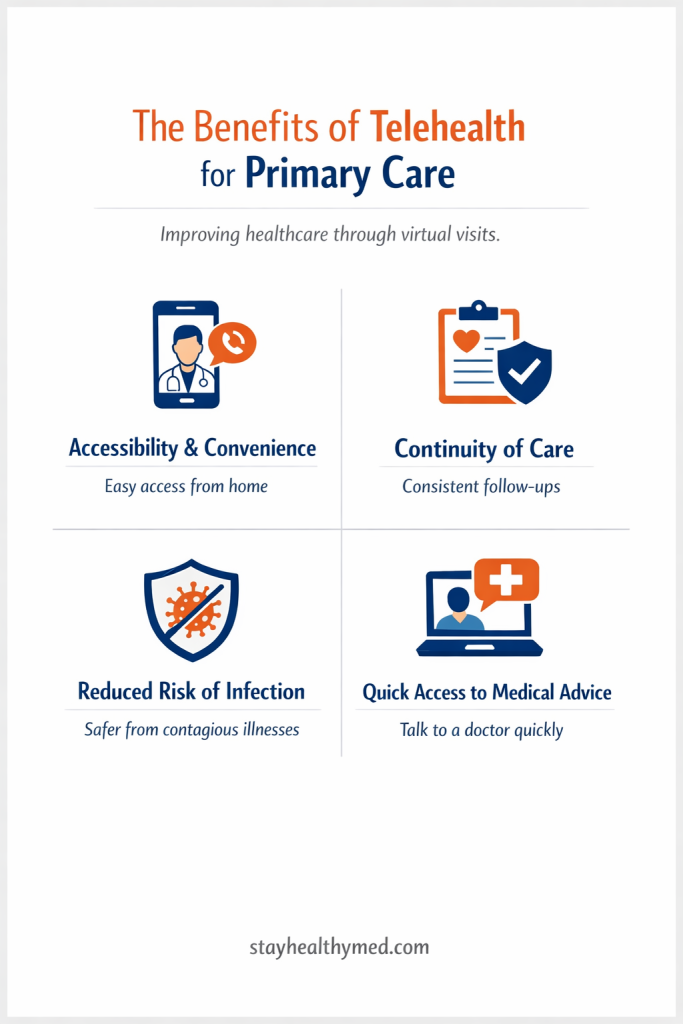
1. Accessibility and Convenience
Busy professionals or parents often struggle to fit doctor visits into their schedules. Telehealth removes barriers like commuting, parking, and waiting rooms. Appointments can be scheduled during breaks, early mornings, or evenings, ensuring patients receive consistent care without disrupting their routines.
2. Continuity of Care
For chronic conditions such as diabetes, high blood pressure, or thyroid disorders, telehealth ensures ongoing monitoring. Regular check-ins with your primary care provider can occur virtually, making it easier to adjust medications, review lab results, or discuss lifestyle changes in real time.
3. Reduced Risk of Infection
Virtual visits minimize exposure to contagious illnesses, which is especially important for individuals with compromised immune systems or during flu and cold seasons. Telehealth allows you to maintain routine care safely, even when in-person visits might pose a risk.
4. Quick Access to Medical Advice
Instead of waiting days or weeks for an appointment, telehealth often provides faster access to your provider. Immediate guidance for minor illnesses, medication adjustments, or preventive care questions can help patients avoid unnecessary complications or emergency visits.
The Benefits of Telehealth for Psychiatry Services
Mental health care, including therapy and psychiatric services, has traditionally required in-person appointments. Telehealth is changing that landscape by providing new opportunities for consistent and convenient mental health support.
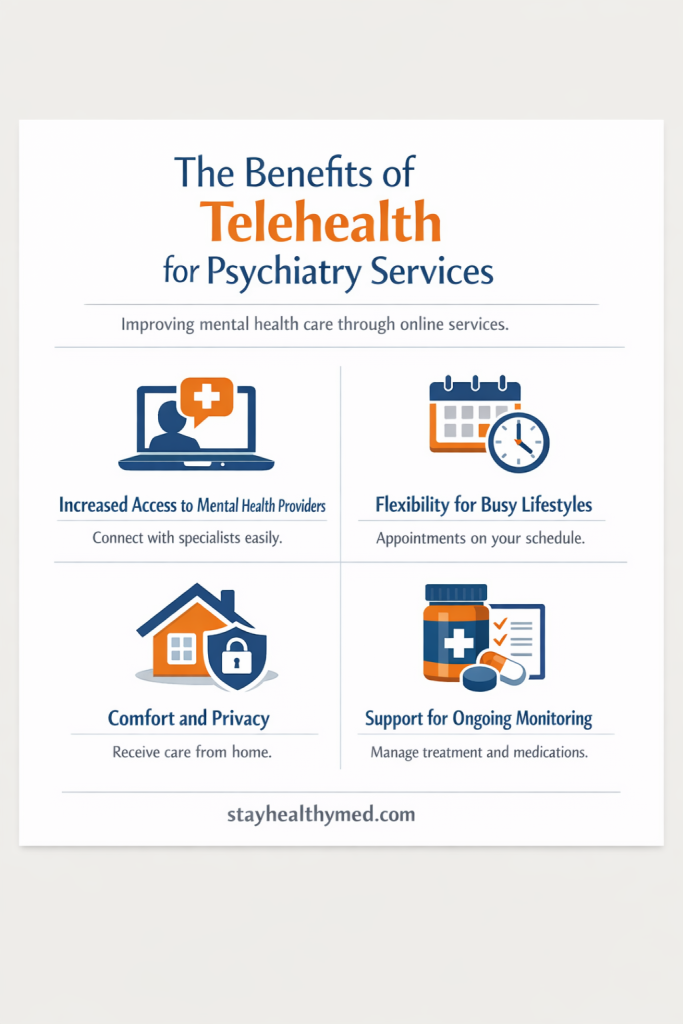
1. Increased Access to Mental Health Providers
Many people face geographic, transportation, or scheduling barriers to therapy or psychiatry services. Telehealth allows patients to connect with licensed professionals regardless of location, making mental health support more attainable.
2. Flexibility for Busy Lifestyles
Scheduling therapy around work, family, or school commitments can be challenging. Virtual sessions provide flexibility, allowing individuals to engage in care without major disruptions to their daily routines.
3. Comfort and Privacy
Some patients feel more comfortable discussing sensitive issues from their home or a private space. Telehealth can reduce anxiety associated with clinic visits and encourage more open communication.
4. Support for Ongoing Monitoring and Medication Management
For psychiatric patients taking medications for conditions such as anxiety, depression, or ADHD, telehealth allows for timely medication reviews, symptom tracking, and adjustments without requiring an in-person visit every time.
Common Hesitations About Telehealth
Despite its benefits, many patients remain hesitant to adopt telehealth. Some of the most common concerns include:
- Effectiveness: Some people worry virtual visits are less thorough than in-person care. While telehealth has limitations (e.g., physical exams), providers can often assess most conditions effectively and recommend in-person visits when necessary.
- Technology barriers: Lack of familiarity with video conferencing or unstable internet connections can be intimidating. Many platforms are now user-friendly, and support is often available to guide patients.
- Privacy concerns: Patients sometimes worry about confidentiality. Reputable telehealth platforms use secure, HIPAA-compliant software to protect personal health information.
- Insurance coverage: Coverage can vary by plan, but telehealth services are increasingly included in standard insurance and membership-based primary care offerings.
Understanding these concerns helps patients weigh the pros and cons of telehealth realistically.
How Telehealth Enhances Preventive Care
Preventive care is easier to maintain with telehealth, especially for busy professionals who struggle to schedule annual exams, lab reviews, or routine screenings.
Telehealth makes preventive care more accessible by allowing:
- Virtual wellness consultations
- Nutritional guidance and lifestyle counseling
- Mental health check-ins to monitor stress or early signs of burnout
- Follow-up discussions for test results or immunizations
By integrating telehealth into your routine care, preventive strategies become more consistent, helping you maintain long-term health without disruption.
Combining Telehealth with In-Person Visits

Telehealth isn’t meant to completely replace in-person care. Instead, it complements traditional visits, creating a flexible hybrid model.
- Routine check-ins and follow-ups: These can often be conducted virtually to save time, reduce travel, and maintain consistent communication between patients and providers.
- Physical exams and screenings: Hands-on evaluations, diagnostic testing, vaccinations, and certain procedures are best performed in person when a physical assessment is necessary.
- Behavioral therapy and psychiatry sessions: Many counseling and medication management appointments can be effectively delivered virtually, unless face-to-face interaction is clinically indicated or preferred.
This combination allows patients to benefit from the convenience of telehealth while still accessing comprehensive, hands-on care when needed.
Practical Tips for Using Telehealth Effectively
Telehealth has become an essential part of modern healthcare, offering patients greater flexibility and access to care from the comfort of their homes. When used thoughtfully and with proper preparation, virtual visits can be just as effective and meaningful as in-person appointments.
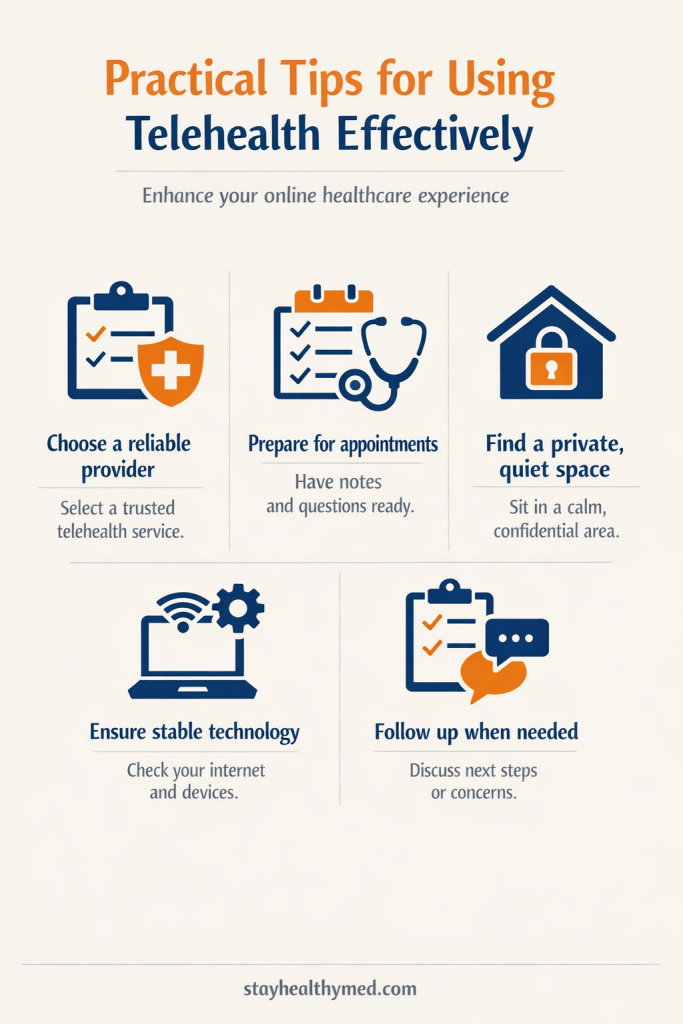
- Choose a reliable provider: Ensure your primary care or psychiatry provider is experienced with virtual care and comfortable addressing your specific health needs through telehealth platforms.
- Prepare for appointments: Have a clear list of symptoms, current medications, recent health changes, and questions ready to make the most of your time. Keeping notes nearby can help you stay organized and focused.
- Find a private, quiet space: Reduce distractions and select a confidential environment where you feel comfortable discussing personal health information openly.
- Ensure stable technology: Check your internet connection, device compatibility, camera, and audio settings in advance to prevent interruptions during your session. Logging in a few minutes early can also help troubleshoot issues.
- Follow up when needed: Telehealth works best when combined with proactive follow-up, recommended lab tests, prescribed treatments, or in-person visits when necessary to ensure comprehensive care.
By approaching telehealth strategically, patients can maximize its benefits while maintaining high-quality, continuous care.
Final Thoughts: Telehealth and Your Health
Telehealth is no longer just an alternative — it’s a transformative tool in primary care and psychiatry. It provides convenience, accessibility, and continuity, making it easier for busy professionals to maintain physical and mental wellness.
If you’re still hesitant, consider this: telehealth reduces travel time, enhances preventive care, and allows for timely management of chronic conditions. It also creates safer and more private mental health sessions, which can encourage consistent engagement with therapy or psychiatric care.
Take the next step toward better health.Learn how Stay Healthy! LLC offers a Direct Primary Care Membership that integrates telehealth and in-person services. With flexible appointments, enhanced access, and a provider who listens to your unique needs, you can stay on top of both your physical and mental health — without disrupting your busy lifestyle.