ADHD is one of the most widely discussed yet persistently misunderstood conditions, and the myths about ADHD continue to spread faster than the facts—often reducing a complex neurodevelopmental disorder to nothing more than being unfocused or overly energetic. These myths about ADHD don’t just cause confusion; they create real barriers to diagnosis, compassionate support, and access to appropriate treatment for countless children and adults.
If you or someone you love has ever questioned whether your struggles are “just personality quirks” or something more, you’re not alone. This breakdown is here to replace misconceptions with evidence-based clarity that every parent, partner, teacher, and employer should know.
In this guide, you’ll learn what ADHD truly is, what it isn’t, and why understanding it accurately is essential for reducing stigma and helping people thrive.
What ADHD Really Is: A Straightforward Explanation
Attention-Deficit/Hyperactivity Disorder (ADHD) is a neurodevelopmental condition that affects brain areas responsible for attention regulation, impulse control, emotional processing, and executive function (planning, memory, organization, time management).
ADHD is not:
- a lack of intelligence
- a lack of effort
- a personality flaw
- caused by bad parenting
- a phase people grow out of
There are three primary subtypes:
- Inattentive Type – disorganization, forgetfulness, daydreaming, difficulty starting or finishing tasks
- Hyperactive/Impulsive Type – restlessness, fidgeting, interrupting, impulsive decisions
- Combined Type – a mix of both
ADHD shows up differently in everyone. Some people are loud and energetic; others are quiet, anxious, or appear deeply thoughtful. Some excel in creative environments; others struggle silently for years without realizing why daily life feels harder for them than for others.
Myths About ADHD
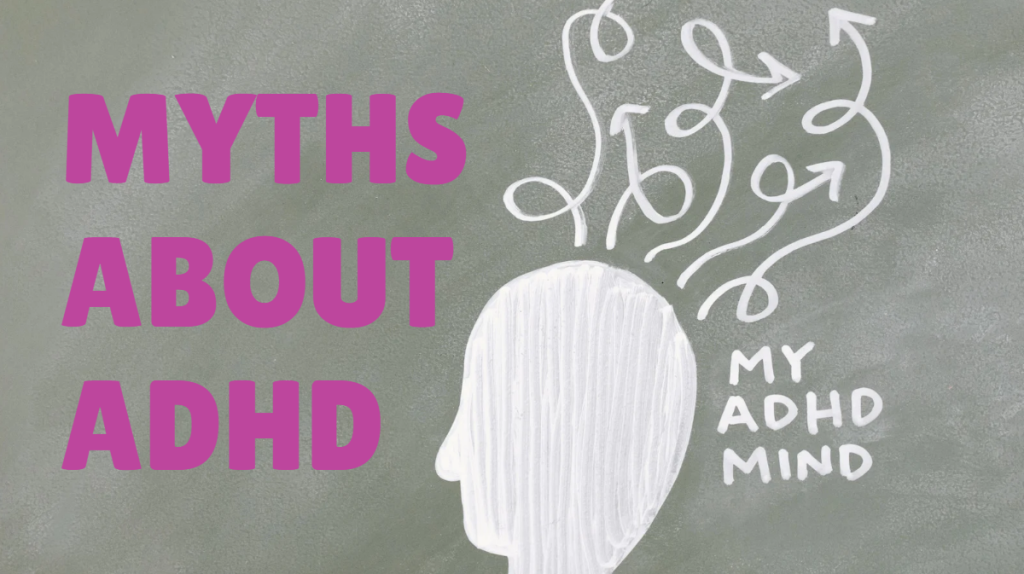
Myths about ADHD continue to shape how people view the condition, and these myths about ADHD not only fuel misunderstandings but also make it harder for individuals to receive the support they truly need.
Myth #1: “ADHD Is Just for Kids.”
Fact: ADHD is lifelong—and many adults are diagnosed late.
For decades, ADHD was seen as something children “grew out of,” largely because early research focused almost exclusively on young boys. But today we know the truth: ADHD persists into adulthood in the majority of cases, even if symptoms shift with age.
Adults may not run around or climb furniture, but they often feel:
- persistent mental restlessness
- difficulty focusing during long meetings
- trouble managing time or staying organized
- chronic lateness
- emotional overwhelm
Many adults go undiagnosed for years—especially women who grew up masking symptoms or were mislabeled as “shy,” “daydreamy,” or “too sensitive.”
Primary care providers now recognize these patterns more clearly, leading to a rise in accurate adult diagnoses—not because ADHD is “more common,” but because we’re finally identifying it correctly.
Myth #2: “People With ADHD Just Need to Try Harder.”
Fact: ADHD is a neurological condition—not a motivation issue.
One of the most damaging myths is the idea that individuals with ADHD are lazy, unmotivated, or not trying hard enough.
In reality, ADHD stems from differences in dopamine pathways, which affect how the brain handles:
- task initiation
- reward processing
- executive functioning
- emotional regulation
That’s why people with ADHD can excel at things they love (thanks to hyperfocus) yet struggle intensely with tasks that feel boring, overwhelming, or unclear.
Trying harder doesn’t rewire brain circuits.
But support, strategies, therapy, and (for many people) medication do.
Thinking of ADHD as a “willpower problem” is outdated, stigmatizing, and simply incorrect.
Myth #3: “ADHD Is Overdiagnosed.”
Fact: ADHD is actually underdiagnosed in many groups.

While some believe ADHD is labeled too easily, research consistently shows the opposite—especially among:
- women and girls
- Black and Hispanic individuals
- adults over 25
- people from low-income communities
Girls often internalize symptoms, appearing quiet rather than disruptive. Adults learn to mask or compensate. Cultural stigma keeps many from seeking evaluation at all.
So no—ADHD isn’t an “easy” diagnosis. It’s a disorder many people struggle with for decades before anyone validates their experience.
Myth #4: “Everyone Is a Little ADHD Sometimes.”
Fact: Occasional forgetfulness ≠ clinical ADHD.
Everyone deals with distraction and stress. But clinical ADHD is different because it involves:
- persistent symptoms
- significant impairment
- impact on multiple areas of life
- patterns starting in childhood
- difficulties that are NOT explained by mood, medical issues, or environment
Saying “everyone is a little ADHD” minimizes the very real challenges people face—challenges that can disrupt school, work, relationships, and mental health.
Myth #5: “ADHD Only Looks Like Hyperactivity.”
Fact: Many people with ADHD look calm on the outside but overwhelmed on the inside.
The stereotypical image of a hyper kid bouncing off the walls ignores the experiences of millions of people—especially women and teens.
The inattentive subtype often includes:
- zoning out
- forgetfulness
- losing things
- difficulty following instructions
- slow processing speed
- internal restlessness
These individuals frequently go unnoticed because they’re not disruptive. But their internal world may feel chaotic, pressured, or constantly out of sync with expectations.
Another overlooked ADHD trait?
Hyperfocus—the ability to concentrate intensely on a specific task while ignoring everything else. It’s powerful, but can also lead to burnout when not managed properly.
Myth #6: “Bad Parenting Causes ADHD.”
Fact: ADHD is biological, neurological, and heavily genetic.

Parents do not cause ADHD.
What they can influence is how well a child with ADHD functions and thrives.
Research shows several contributors—but parenting is not one of them:
- Genetics (one of the strongest predictors)
- Prenatal factors (smoking, alcohol exposure, prematurity)
- Early environmental toxins (e.g., lead exposure)
Supportive parenting strategies help kids succeed, but they don’t cure or cause ADHD.
This myth hurts families and prevents parents from seeking support out of fear they’ll be judged. It’s long past time to retire it.
Myth #7: “ADHD Medication Is Dangerous or Overprescribed.”
Fact: ADHD medications are among the most researched and effective treatments in mental health.
Stimulants and non-stimulants have been studied for decades. When prescribed responsibly and monitored by a clinician, they are:
- safe
- effective
- life-changing for many
They help regulate dopamine, improving:
- focus
- emotional control
- impulse management
- follow-through
- daily functional ability
Common fears include:
❌ “Medication will change my personality.”
❌ “I’ll get addicted.”
❌ “Stimulants are too risky.”
Here’s the reality:
✔ Medication reveals your true abilities—it doesn’t erase them.
✔ When taken as prescribed, stimulants show low risk for addiction.
✔ Clinicians monitor heart rate, blood pressure, side effects, and response to ensure safety.
Medication isn’t the only solution, but for many, it’s a critical part of managing symptoms and improving quality of life.
Myth #8: “ADHD Isn’t Real—People Use It as an Excuse.”
Fact: ADHD is recognized worldwide as a legitimate medical condition.
This myth often comes from misinformation, cultural beliefs, or lack of understanding. But evidence is overwhelming:
- Neuroimaging shows structural and functional brain differences.
- Genetics studies show strong heritability.
- Symptoms respond to evidence-based treatments.
- ADHD affects multiple life domains—not just school or work.
People with ADHD are not “making excuses.”
They’re trying to understand their brains, access support, and stop blaming themselves for barriers they never chose.
Myth #9: “You Can’t Have ADHD If You’re Successful.”
Fact: Many high-achieving people have ADHD—they’ve simply developed coping systems.

ADHD doesn’t stop someone from being creative, talented, intelligent, or driven. In fact, many entrepreneurs, leaders, artists, and innovators have ADHD traits that fuel their success.
However, this success often comes with hidden costs:
- burnout
- anxiety
- long work hours to compensate
- emotional dysregulation
- chronic overwhelm
People can excel AND struggle with executive dysfunction.
ADHD doesn’t cancel out intelligence or ambition—and success doesn’t erase ADHD.
Myth #10: “ADHD Only Affects School or Work.”
Fact: ADHD affects every part of life—even the emotional and relational ones.
ADHD is not just about missing deadlines or forgetting assignments. It can influence:
- relationships (forgetfulness mistaken as “not caring”)
- emotional reactions (strong responses, irritability, rejection sensitivity)
- financial habits (impulse spending, difficulty budgeting)
- daily routines (sleep problems, clutter, difficulty maintaining systems)
- mental health (higher rates of depression, anxiety, and low self-esteem)
Untreated ADHD can create a ripple effect that impacts entire families—which is why early diagnosis and compassionate care matter deeply.
Myth #11: “There’s Only One Way to Treat ADHD.”
Fact: ADHD treatment is personalized—not one-size-fits-all.
The best ADHD care combines multiple supportive strategies, such as:
- medication (if appropriate)
- skills-based therapy or ADHD coaching
- cognitive-behavioral therapy
- lifestyle changes
- structured routines
- digital tools (timers, apps, planners)
- support from family, employers, and community
No two ADHD journeys are alike.
Some need medication; some don’t.
Some thrive with coaching; others benefit from therapy.
What matters is creating a treatment plan that aligns with the individual—not trying to fit them into a pre-existing mold.
How Primary Care and Mental Health Work Together to Reduce Stigma
Integrated care helps ensure patients get whole-person support.
This may include:
- comprehensive evaluations
- ruling out medical conditions
- monitoring mental health symptoms
- medication management
- therapy referrals
- structured follow-ups
- guidance for lifestyle habits (sleep, diet, exercise)
A team approach leads to earlier detection, better outcomes, and improved confidence in treatment decisions.
Frequently Asked Questions About ADHD

1. Can ADHD appear later in life?
Symptoms begin in childhood but may not become noticeable until adult responsibilities grow.
2. Is it possible to have ADHD without hyperactivity?
Yes—this is the inattentive subtype, often overlooked in women and quiet children.
3. What’s the difference between ADHD and anxiety?
ADHD affects attention and executive function; anxiety involves fear, worry, and overthinking. Many people have both.
4. Can lifestyle changes help without medication?
Yes—structure, sleep, movement, therapy, and mindfulness can help. But for many, medication remains a key tool.
5. Is ADHD caused by too much screen time?
No. Screens may worsen symptoms, but they don’t cause the disorder.
6. How do I know if I might have adult ADHD?
If daily tasks feel harder than they should—organization, focus, time, emotions—an evaluation may help.
Final Thoughts
Myths about ADHD don’t just create confusion—they create barriers that keep people from understanding themselves and getting the support they deserve. When we replace stigma with science and compassion, we give individuals the freedom to finally see their brain with clarity instead of judgment. With understanding comes empowerment: the ability to build healthier systems, seek effective treatment, and thrive without shame.
ADHD does not diminish a person’s intelligence, value, or potential. It simply offers insight into how their brain operates—so they can stop fighting battles they were never meant to face alone and start using strategies that truly work for them.
If you or someone you love suspects ADHD, reaching out to a qualified mental health professional or primary care provider is a powerful first step. Support, clarity, and hope are available, and no one has to navigate this alone.Stay Healthy! LLC is committed to promoting education, compassion-driven care, and whole-person wellness—because healing begins with knowledge, and knowledge begins with truth.