Navigating primary care vs specialty care can feel overwhelming for first-time patients, but grasping these differences empowers you to choose the right doctor efficiently. Primary care providers act as your health quarterback for routine needs, while specialists target complex, specific conditions—understanding both ensures coordinated, cost-effective care.
Whether you’re establishing care for the first time or switching providers, mastering primary care vs specialty care lays the groundwork for proactive wellness and quicker access to targeted treatment.
What Is Primary Care?
Primary care is the front line of your healthcare system—your first point of contact for most medical concerns. A primary care provider (PCP) is a doctor, nurse practitioner, or physician assistant trained to manage your overall health through prevention, early detection, and long-term care coordination.
Think of your PCP as your healthcare partner—someone who knows your full medical story, keeps track of your progress, and helps you make informed choices. They manage a broad range of physical, mental, and emotional health conditions over time, maintaining continuity and consistency in care.
The Core Goals of Primary Care:
- Promoting preventive health through screenings, immunizations, and lifestyle counseling.
- Managing chronic diseases such as diabetes, hypertension, or asthma.
- Diagnosing and treating acute illnesses, like infections or minor injuries.
- Coordinating care and referring patients to specialists when needed.
- Building a long-term doctor-patient relationship based on trust and ongoing communication.
Your primary care provider is essentially your “home base” in the healthcare system—the one who ensures all aspects of your care are connected and coherent.
Common Types of Primary Care Providers

Primary care is delivered by professionals with different specialties tailored to patient needs:
- Family Medicine Physicians – Provide care for all age groups, from infants to seniors. They handle preventive medicine, chronic illness management, and general wellness for the entire family.
- Internal Medicine Physicians – Focus on adult health, managing complex medical conditions and preventive screenings for adults aged 18 and older.
- Pediatricians – Specialize in newborn, child, and adolescent health, overseeing vaccinations, developmental milestones, and early disease prevention.
- Geriatricians – Focus on healthcare for older adults, addressing age-specific concerns like mobility, cognition, and medication management.
- Nurse Practitioners (NPs) and Physician Assistants (PAs) – Often provide primary care in clinics and community health centers. They can diagnose, prescribe, and coordinate care with physicians.
What Is Specialty Care?
Specialty care refers to medical services provided by doctors with advanced training in a specific area of medicine. Rather than offering comprehensive general care, specialists focus on diagnosing, managing, and treating particular organ systems or diseases.
You typically see a specialist through a referral from your primary care provider, particularly when your condition requires advanced testing, specialized equipment, or targeted treatment that goes beyond general practice.
Common Examples of Medical Specialists Include:
- Cardiologists: Heart and blood vessel disorders
- Dermatologists: Skin, hair, and nail conditions
- Endocrinologists: Hormone and gland-related conditions like diabetes or thyroid disease
- Gastroenterologists: Digestive system problems
- Orthopedic Surgeons: Bone, muscle, and joint issues
- Obstetricians/Gynecologists (OB/GYNs): Women’s reproductive health
- Psychiatrists and Neurologists: Mental and brain-related disorders
Specialists often work in collaboration with primary care providers to provide treatment continuity and follow-up care.
Primary Care vs Specialty Care: The Main Differences
Although both types of physicians aim to improve your health, their roles differ in scope, focus, and depth of care. The chart below helps clarify their primary distinctions:
| Aspect | Primary Care | Specialty Care |
| Focus | Whole-person health, prevention, and early detection | Specific organ system or condition |
| Scope | Broad – covers all general health needs | Narrow – highly targeted expertise |
| Access | Usually the first point of contact | Often requires referral or prior diagnosis |
| Continuity | Long-term relationship with ongoing care | Usually short-term or episodic |
| Goal | Maintain wellness and manage chronic conditions | Solve complex or specific medical issues |
Both are essential to a complete healthcare system; primary care keeps you healthy, while specialty care ensures precision treatment when needed.
When Should You See a Primary Care Provider?
Your first contact in almost any non-emergency health situation should be your primary care provider. They can assess your symptoms, identify potential underlying causes, and determine whether specialist care is required.
Common reasons to visit your PCP include:
- Annual physical exams or wellness visits.
- Common cold, flu, infections, or minor illness.
- Routine lab work or health screenings.
- Managing chronic diseases like diabetes, hypertension, or high cholesterol.
- Mental health support (initial assessment and counseling or referrals).
- Immunizations and preventive care.
Your PCP ensures your care stays holistic—they keep track of everything from your medications to your lifestyle habits, often preventing situations from escalating into serious issues.
When Should You See a Specialist?
Your primary care provider might refer you to a specialist if:
- You’ve developed a complex condition needing advanced diagnostics (such as heart disease, cancer, or autoimmune disorders).
- Your symptoms persist or worsen despite initial treatment by your PCP.
- You require surgical procedures or specialized imaging.
- A specific area of your body needs in-depth evaluation, such as the retina (eye doctor) or joints (orthopedic specialist).
For example, if your PCP identifies an irregular heartbeat, they might refer you to a cardiologist for advanced evaluation. Or if a chronic rash doesn’t respond to basic treatment, a dermatologist can investigate further to identify root causes.
How Primary and Specialty Care Work Together

The relationship between primary and specialty care is collaborative, not competitive. Your PCP acts as a care coordinator, ensuring that your specialists accurately understand your overall medical history, medications, and ongoing treatments. This integration reduces the risk of duplicate tests, conflicting prescriptions, or gaps in care.
For example:
- Your primary care doctor may identify high blood sugar levels and refer you to an endocrinologist for diabetes management.
- The specialist then provides advanced therapy recommendations, which your PCP integrates into your daily care plan.
- Both collaborate through shared medical records and follow-ups, ensuring continuous monitoring.
This team-based approach delivers safer, more comprehensive, and cost-efficient healthcare.
Why Primary Care Matters for Long-Term Health
One of the most underestimated benefits of primary care is preventive health—catching problems before they become costly or dangerous. Regular check-ups and screenings can reveal early warning signs of serious diseases such as heart disease, cancer, or diabetes.
Studies consistently show that people who maintain ongoing relationships with a primary care provider experience:
- Fewer hospitalizations and emergency visits.
- Lower healthcare costs over time.
- Improved life expectancy.
- Better management of chronic illness.
Your PCP also plays a vital role in mental health evaluation, immunization tracking, and lifestyle modification advice—making them a key player in your lifelong wellness.
Tips for First-Time Patients Navigating Care
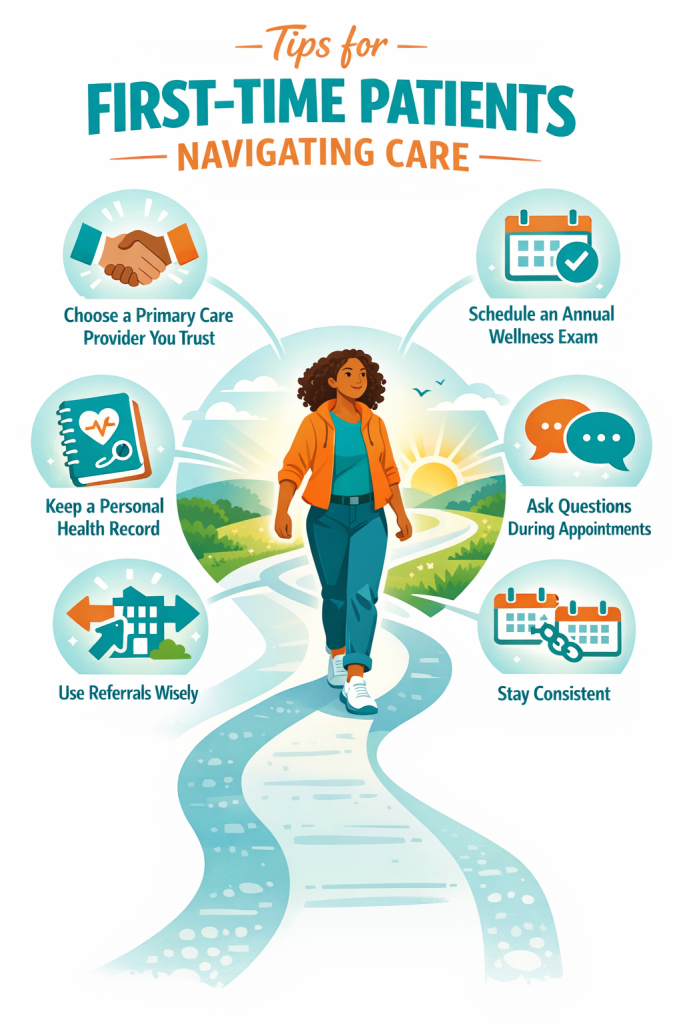
If you’re new to the healthcare system or haven’t established care with a provider recently, these steps can help simplify the process:
- Choose a Primary Care Provider You Trust – Look for someone credentialed, communicative, and comfortable discussing both physical and emotional health.
- Schedule an Annual Wellness Exam – Preventive visits allow your doctor to establish baseline metrics and detect early problems.
- Keep a Personal Health Record – Track medications, allergies, and immunizations so you can share accurate information during visits.
- Ask Questions During Appointments – Don’t hesitate to clarify recommendations, test results, or terminology.
- Use Referrals Wisely – Trust your PCP’s guidance when selecting specialists; it’s part of building an integrated care plan.
- Stay Consistent – Regular check-ins help your provider understand patterns and ensure no detail slips through.
These habits not only improve your care quality but also empower you to make confident healthcare decisions.
Final Thoughts
Navigating healthcare doesn’t have to be confusing once you understand the difference between primary care and specialty care. Think of your primary care provider as the hub of your health journey—offering preventive, ongoing, and personalized care—while specialists serve as skilled partners who focus on specific problems when necessary.
For first-time patients, starting with a trusted primary care provider is the smartest move. They’ll help interpret your symptoms, coordinate referrals, and guide you through every phase of your wellness plan.
At Stay Healthy! LLC, we make it simple to get the care you deserve. Our team of board-certified primary care providers and medical specialists work collaboratively to deliver comprehensive, coordinated health services for every stage of life.
Take charge of your health today — schedule your first visit with Stay Healthy! LLC and experience care that’s personal, preventive, and patient-focused.