
PTSD in woman is often associated with combat veterans, but women experience this condition at nearly twice the rate of men. In many cases, their triggers and trauma types differ significantly. Understanding what can trigger PTSD in woman—and learning healthy coping strategies—can be a crucial step toward healing and reclaiming a sense of safety and control.
PTSD: More Than Just Flashbacks
PTSD is a mental health condition that develops after experiencing or witnessing a traumatic event. Symptoms may appear weeks, months, or even years after the trauma and can include intrusive memories, emotional numbness, guilt, hypervigilance, or avoidance of certain people or places.
For women, the nature of trauma often connects to interpersonal relationships and emotional safety rather than battlefield or physical injuries. This difference greatly influences both the intensity of symptoms and the path to recovery.
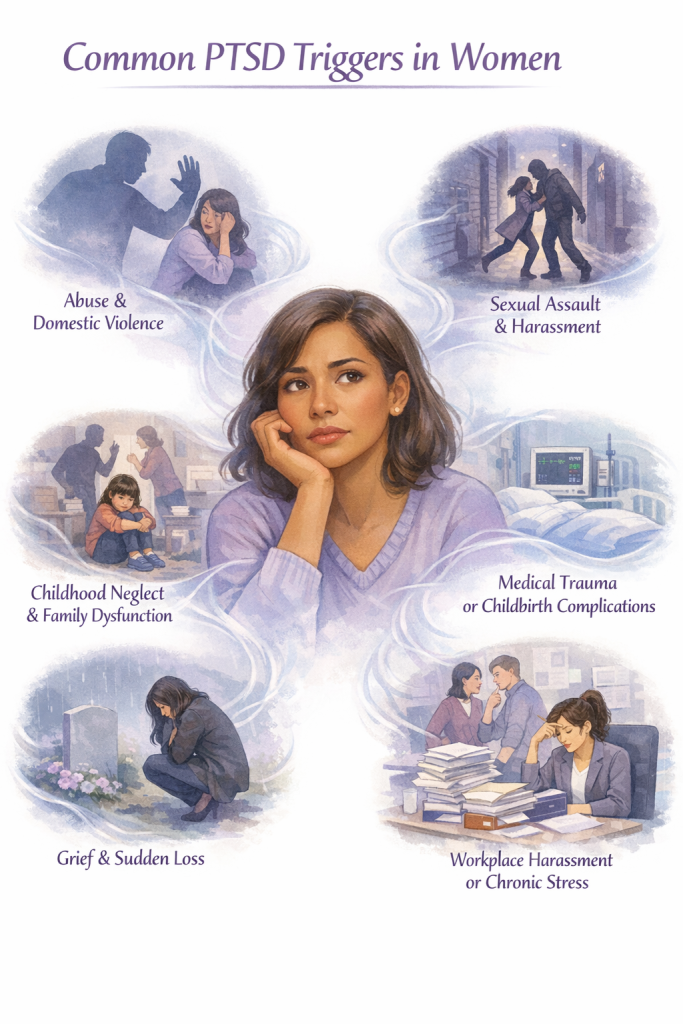
PTSD in Woman: Common Triggers
Triggers are sensory or emotional reminders that force a person to relive aspects of past trauma. These vary from person to person but typically involve one or more of the following categories:
1. Abuse and Domestic Violence
Women are disproportionately affected by domestic violence and emotional abuse.
Common triggers include:
- Hearing an argument or raised voice.
- Seeing a physical confrontation on TV or in public.
- Being in confined spaces with someone aggressive.
Even subtle cues, such as tone of voice or certain phrases used by an abuser, can cause a sudden rush of fear, anxiety, or dissociation.
2. Sexual Assault and Harassment
Sexual trauma is one of the leading causes of PTSD among women. The feelings of powerlessness, shame, and violation can persist long after the incident.
Triggers may include:
- Certain smells, touches, or clothing resembling the event.
- Media content involving sexual violence.
- Being alone in poorly lit or enclosed environments.
Recovery often involves working through deep-rooted issues of trust, safety, and self-worth, which can take significant time and professional support.
3. Childhood Neglect and Family Dysfunction
Many adult women with PTSD trace their symptoms back to early developmental traumas, such as neglect, abandonment, or emotional manipulation.
Common triggers:
- Seeing parental conflict.
- Being criticized or dismissed.
- Situations that mimic helplessness or rejection.
These experiences can create lasting emotional wounds, altering how one forms relationships later in life.
4. Medical Trauma or Childbirth Complications
PTSD from medical trauma—especially related to childbirth complications or invasive procedures—is increasingly recognized.
Triggers may include:
- Hospitals, medical smells, or specific sounds (like a monitor beeping).
- Discussions of pregnancy or medical complications.
- Reminders of perceived medical neglect.
Women who experience traumatic births often struggle with identity and fear surrounding motherhood, health, and bodily autonomy.
5. Grief and Sudden Loss
The unexpected death of a loved one can also trigger PTSD symptoms, particularly when the person witnesses the event or blames themselves for the loss.
Common triggers:
- Anniversaries or specific dates.
- Objects or photos connected to the person lost.
- Particular songs or smells associated with them.
Grief can intertwine with trauma, blurring the line between mourning and PTSD-related intrusion.
6. Workplace Harassment or Chronic Stress
Psychological safety at work is often underestimated. Women who have been harassed, bullied, or consistently undermined in professional spaces may develop trauma-like responses.
Triggers:
- Authority figures who mirror the personality of the harasser.
- Performance reviews or high-pressure meetings.
- Feeling unheard or gaslighted in a professional environment.
PTSD in this context can significantly impact confidence, career progression, and interpersonal trust.
How PTSD Manifests in Women
PTSD symptoms in women often differ subtly from men, with higher tendencies toward depression, anxiety, and relational avoidance. Common manifestations include:
- Emotional dysregulation: Intense mood swings, guilt, or fear.
- Avoidance: Staying away from people or situations that might cause reminders.
- Hypervigilance: A constant state of alertness or “waiting for the next bad thing.”
- Somatic symptoms: Chronic pain, headaches, digestive issues, or fatigue.
- Dissociation: Feeling detached from self or surroundings.
Understanding these symptoms helps normalize the experience and opens opportunities for timely intervention.
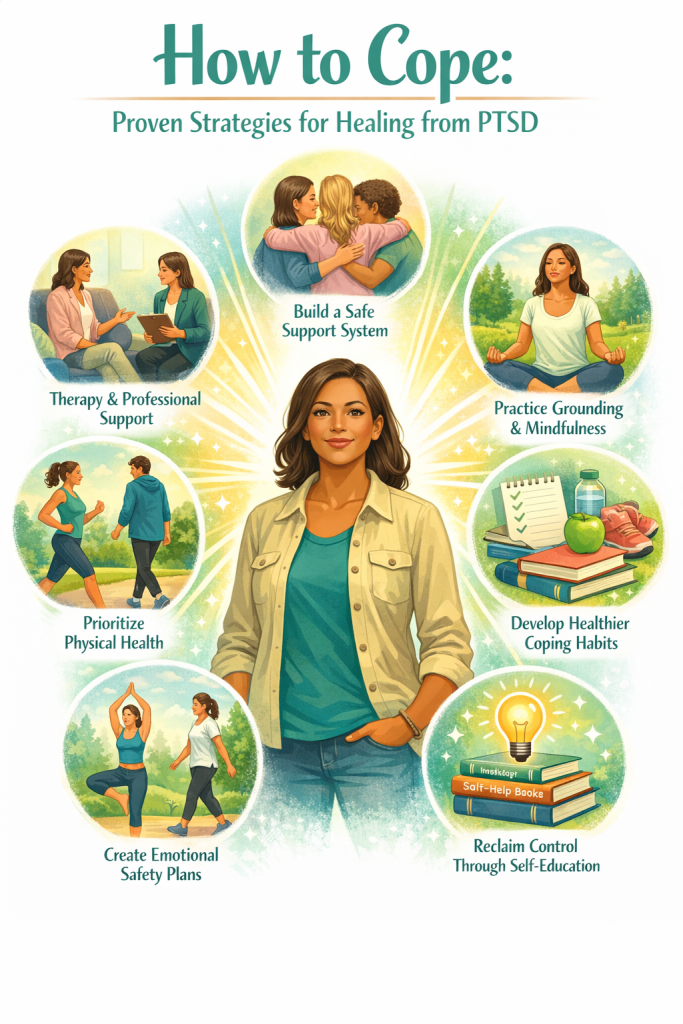
How to Cope: Proven Strategies for Healing
Recovering from PTSD is not about “forgetting the past”; it’s about regaining peace and emotional stability. Below are evidence-based coping strategies that help women manage triggers and foster resilience.
1. Therapy and Professional Support
Different therapy modalities work for different trauma origins:
- Cognitive Behavioral Therapy (CBT): Helps reframe negative thought patterns related to the trauma.
- Eye Movement Desensitization and Reprocessing (EMDR): A specialized therapy proven effective in reducing PTSD symptoms.
- Somatic Experiencing: Focuses on how trauma manifests in the body and helps release physical tension.
Working with a trauma-informed therapist is crucial—someone trained to understand the unique ways women experience and process trauma.
2. Build a Safe Support System
Healing rarely happens in isolation. Trusted relationships provide emotional grounding, accountability, and perspective. Consider:
- Joining support groups for PTSD survivors (online or in-person).
- Relying on family or friends who listen without judgment.
- Establishing boundaries with toxic or dismissive people.
Having even a single empathetic listener can dramatically improve recovery outcomes.
3. Practice Grounding and Mindfulness
Grounding techniques help bring awareness back to the present moment when triggered. Examples include:
- The 5-4-3-2-1 method (naming five things you can see, four things you can touch, three you can hear, etc.).
- Slow breathing or guided meditation.
- Gentle yoga or mindful walking.
These techniques rewire the body’s fear response, teaching the brain that the danger has passed.
4. Develop Healthier Coping Habits
Avoid relying on short-term numbing behaviors like alcohol, overeating, or working excessively. Instead:
- Keep a journal to track emotional triggers.
- Engage in creative outlets such as art, music, or writing.
- Set small, achievable goals that rebuild self-confidence.
Each positive coping habit helps replace old, trauma-based survival patterns.
5. Reclaim Control Through Self-Education
Understanding how trauma affects the brain gives women a sense of empowerment. Learning about fight, flight, freeze, and fawn responses can make reactions feel more explainable and less shameful.
Books, podcasts, or mental health blogs can serve as educational tools that supplement therapy. Knowledge itself is a form of emotional armor.
6. Prioritize Physical Health
The mind-body connection plays an essential role in trauma recovery. Practices that support physical well-being often enhance emotional stability too:
- Maintain consistent sleep schedules.
- Eat nourishing foods rich in magnesium, omega-3, and B vitamins.
- Exercise moderately—especially activities like swimming, walking, or dancing, which connect you with bodily sensations in a safe way.
When the body feels strong and regulated, the mind follows suit.
7. Create Emotional “Safety Plans”
A safety plan outlines what to do when you feel triggered or overwhelmed. It might include:
- A list of calming activities (listening to nature sounds, journaling, etc.).
- Contact numbers of supportive people or professionals.
- A reminder that emotions are temporary and survivable.
A written plan empowers trauma survivors to respond effectively when symptoms arise instead of reacting impulsively.
When to Seek Help
It’s important to reach out for professional help if:
- Flashbacks or nightmares interfere with daily functioning.
- You frequently feel emotionally disconnected or hopeless.
- Panic or anxiety begins to dominate your relationships or work.
- Suicidal thoughts or self-harming behaviors occur.
Trauma can distort perception, making recovery seem impossible. However, countless women have rebuilt their lives fully after receiving appropriate trauma therapy and support.
Final Thoughts
PTSD is not a life sentence—it’s a call to healing, self-awareness, and empowerment. Every woman who has faced trauma deserves compassion, validation, and the resources needed to regain control of her life. Recognizing your triggers is the first step, but healing involves continuous growth, connection, and mindful self-care.
If you or someone you love is struggling with trauma or emotional distress, professional support can make all the difference. Stay Health! LLC offers compassionate, evidence-based mental health services designed to help women recover from trauma, manage PTSD symptoms, and rebuild emotional resilience. Their team of licensed professionals provides therapy, wellness programs, and personalized support tailored to your unique healing journey.
Take the first step toward a stronger, calmer, and healthier you — visit Stay Health! LLC today to schedule a consultation and start your path to recovery.


